Heritage Days 2026 - Château de la Coste
About
Add anto.info to your preferred sourcesThe château, known as de la Coste, appears as the seat of power of the viscounts of Couserans, co-lords of the Ustou valley since at least 1560, the date of its first mention. However, the name Ustou (Ustol) appears in texts in 1202, carried by knights close to the viscount. Throughout the 13th, 14th, and 15th centuries, the d'Ustou family were lords of the valley, paying homage to the viscount. The co-lordship of the Ustou and the viscounts over the valley, whose origin is unknown, only appears in documents in 1656. In 1671, the château, very occasionally inhabited by the Saint-Jean de Pointis (31), heirs of the viscounts and the Ustou, retains a medieval appearance ("Château, courtyard, stables, hayloft, meadow, and arable land near the church") and is relatively modest. Its destruction, well documented, dates back to Sunday, August 15, 1830, following the mass. This followed the July Revolution and the conflict of the population with Mr. de Saint-Jean, the mayor who refused to display the tricolor flag.
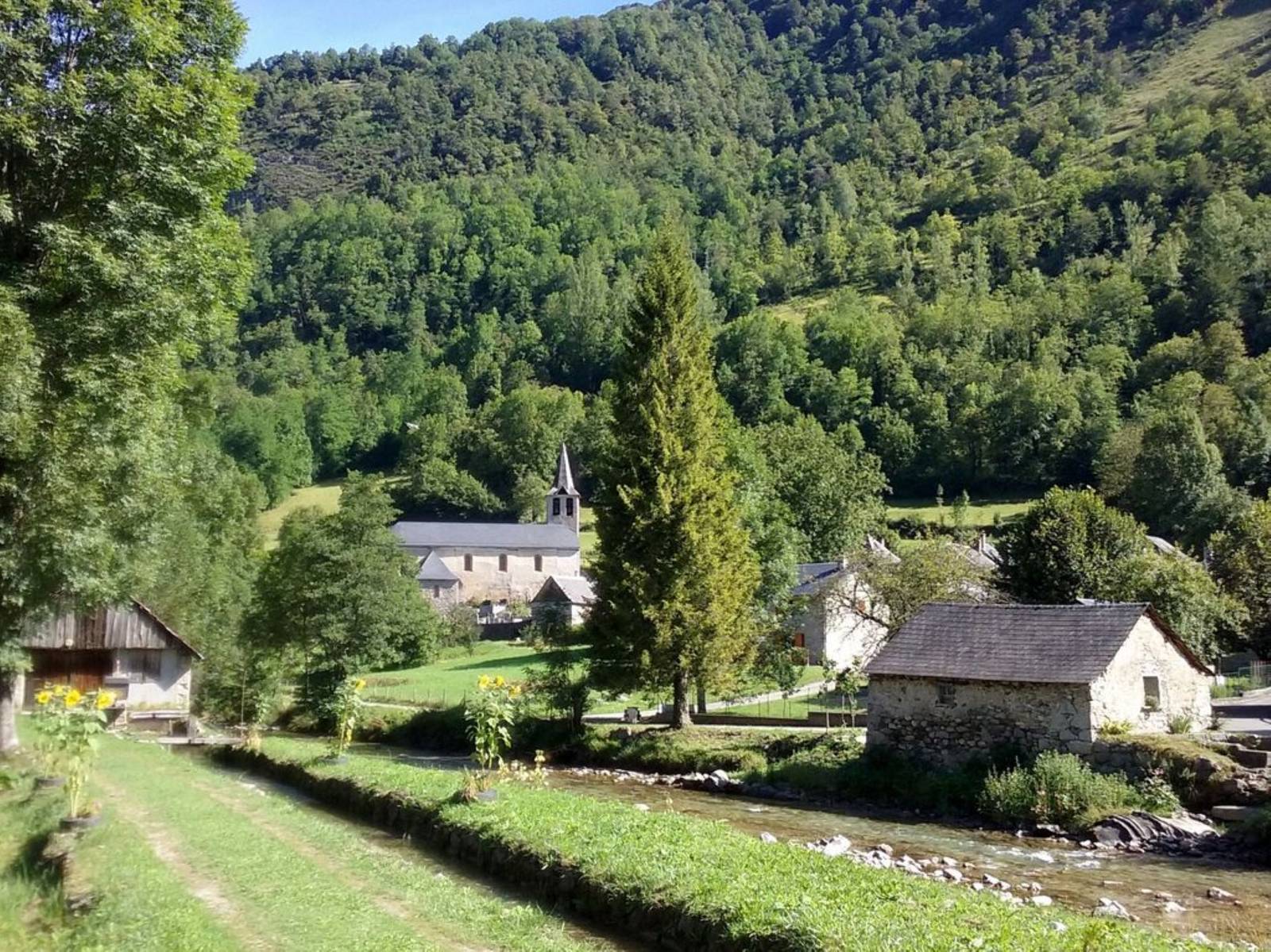
Today, the château of Trein d’Ustou consists of a 5-sided enclosure built on a reshaped "roque" offering a platform of 20 m by 20 m. To the northeast, on the village side, a door topped with a dovecote allows access via a staircase.
The destruction of the château was apparently sudden and violent, revealed by the tableware (late 18th-early 19th centuries) and broken window glasses, as well as traces of combustion under the layers of destruction of the walls. This event must be dated to Sunday, August 15, 1830.
Only a few medieval shards have been uncovered in the levels associated with the foundations of the enclosure. They only reveal an occupation of the site in the Middle Ages (also evidenced by the remains of the Romanesque church less than 10 m away) without dating the building in any way.
Textual mentions, the quality of the remains, and the furniture found in the excavation indicate a modern structure. However, the location of the building on a reshaped roque, bordered by a ditch and associated with a Romanesque church that, in turn, serves a village subordinate to the château, leave little doubt about the existence of a castle structure (a tower?) as early as the 12th century, comparable to the site of Castillon-en-Couserans, in the neighboring Lez valley. The presence of a side aisle and a lateral apse (there does not seem to have been a second one) shows the superior status of this church and probably of its patron, Bernard I, Count of Comminges, or his younger son Roger, the first of the line of the viscounts of Couserans.
Rates: Free access.
Contact Information:
Phone: 05 61 66 86 14
Email: mairie-ustou@wanadoo.fr
Youtube: https://www.youtube.com/@comcomcouserans/videos
Find all practical information and plan your visit.
Event information provided by:

Nearby events
More ideas around you to continue your outing.