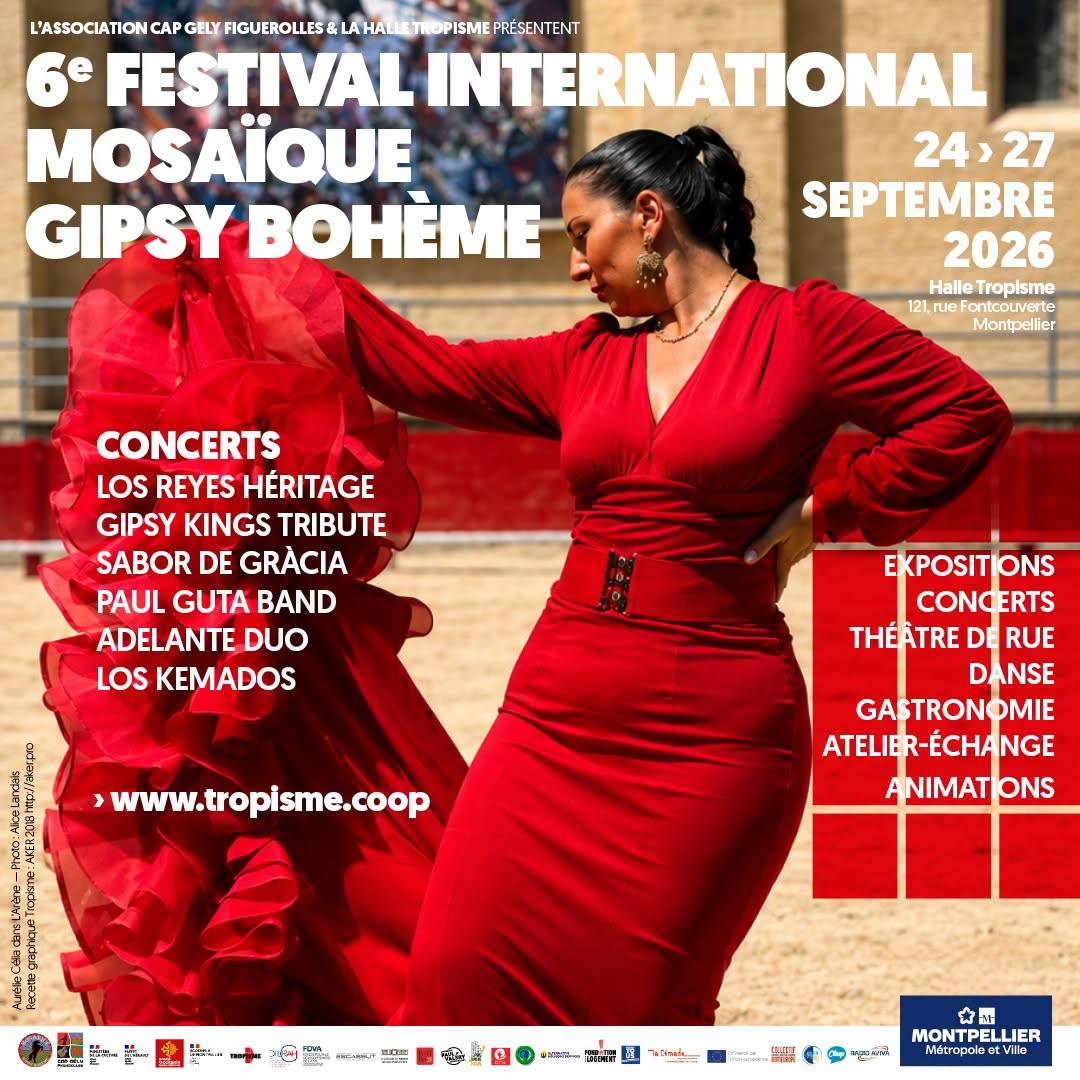
INTERNATIONAL GIPSY BOHÊME MOSAIC FESTIVAL
About
Add anto.info to your preferred sourcesThere are cultures that are passed down through books. Others are told through a guitar, a voice, a dance, or a shared meal. The Romani cultures belong to this living memory. For centuries, they have crossed borders, blended influences, and facilitated dialogue among peoples through an incredible artistic richness.
In Montpellier, this story is deeply rooted in the territory. Since the early 20th century, Romani communities have participated in the life of the city and its cultural identity. They have given rise to artists who have marked the history of music, from Manitas de Plata to the Gipsy Kings, along with the many families who continue today to keep this tradition alive.
The International Gipsy Bohême Mosaic Festival was born from this history.
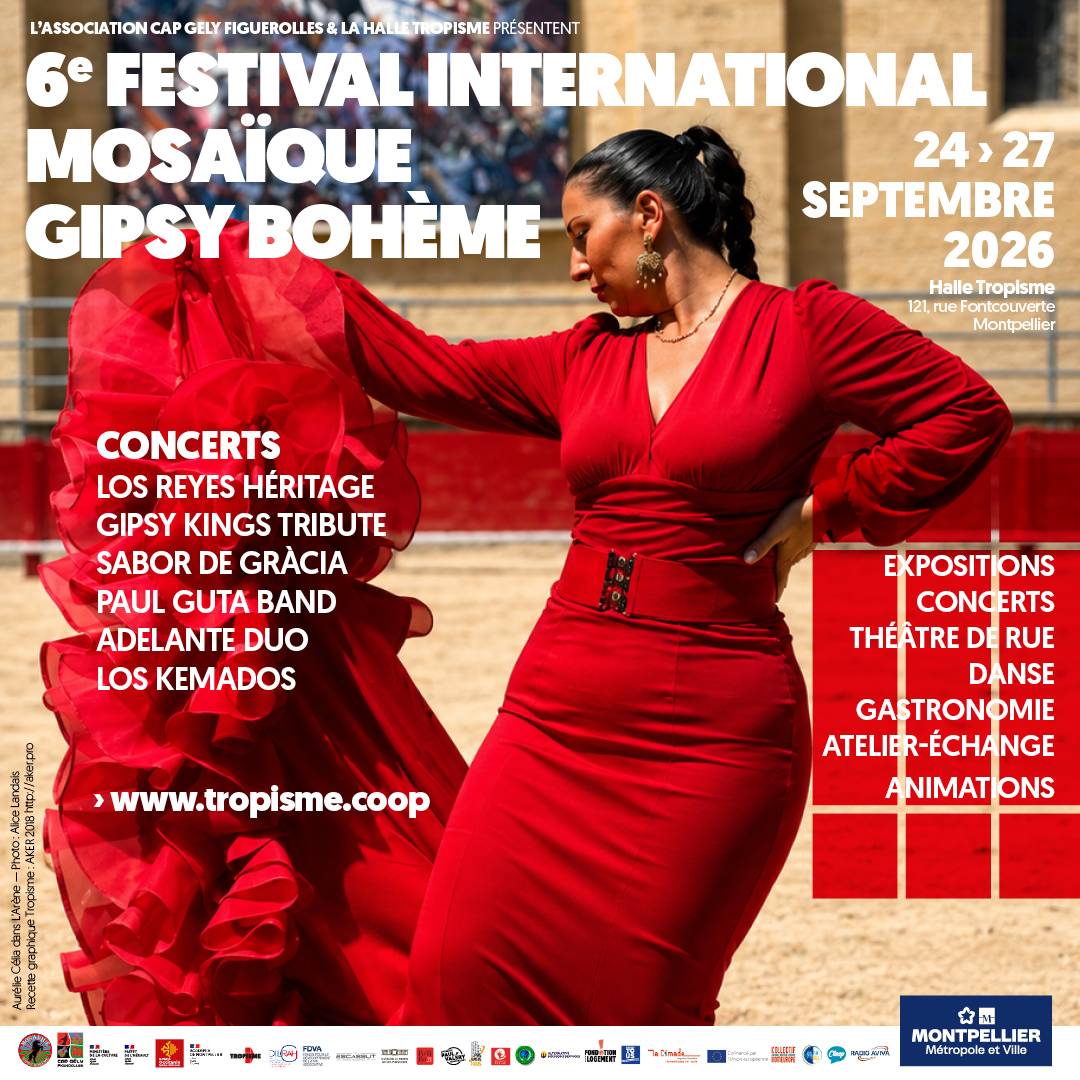
For four days, the Halle Tropisme becomes a place of meetings, discoveries, and transmission where music, dance, photography, gastronomy, crafts, reflection, and contemporary creation intersect.
This edition highlights Catalan Rumba, a popular music born in the Romani neighborhoods of Barcelona, now a candidate for inclusion in UNESCO's intangible cultural heritage. More than a musical genre, it embodies a spirit of sharing, mixing, and freedom that resonates fully with the festival's values.
Open to everyone, the International Gipsy Bohême Mosaic Festival invites all to discover cultures often reduced to a few clichés, but whose history and creativity continue to enrich our shared heritage.
CALENDAR
▬▬ Thursday, September 24 ▬▬
› Official opening of the International Gipsy Bohême Mosaic Festival and exhibition openings
› Concert by Paul Guta Band, virtuoso of jazz manouche and Balkan music
› Flamenco dance performance
▬▬ Friday, September 25 ▬▬
› Grand Gipsy Queen evening, the heirs of the Gipsy Kings
▬▬ Saturday, September 26 ▬▬
› Discovery workshop of Catalan Rumba
› Round table on the candidacy of Catalan Rumba for UNESCO's intangible cultural heritage
› Concert by Los Kemados
› Exceptional concert by Sabor de Gracia, a global reference for Catalan Rumba, led by Sicus Carbonell
▬▬ Sunday, September 27 ▬▬
› Musical Gitan lunch
› Closing concert with Los Kemados
EXHIBITIONS & ANIMATIONS
Throughout the festival, discover exhibitions dedicated to Romani cultures as well as a festive space for the whole family:
› Photographs by René Robert, a figure in flamenco.
› A model of Romani camps, depicting the traditional habitat of nomadic communities.
› Romani Worlds, in partnership with the National Museum of Immigration History.
› Nomadic Itinerary, proposed by the Gitan Theatre.
› A fairground space, with inflatable structures and activities for young and old.
4 days of festival
5 concerts
4 exhibitions
Conferences and meetings
Participatory workshops
A dining area
A fairground
Family activities
A program open to all audiences
Find all practical information and plan your visit.
Nearby events
More ideas around you to continue your outing.